Video-to-Text Transcription: 5 Fast AI-Powered Methods

Modern work life demands speed and precision in how we manage information. Wasting time jotting down notes from meetings or rewatching long recordings hurts team efficiency. That's why finding a fast way to transcribe video to text has become essential for professionals who want to save time and focus on high-value, strategic work.
Artificial intelligence has transformed this landscape by replacing manual typing with smart, automated processes. In this guide, you'll learn how new audio conversion and language processing technologies structure conversations and simplify workplace workflows.
Table of Contents
- How AI revolutionized video-to-text transcription
- 5 top technology approaches for transcribing meetings and videos
- Automatic speech recognition vs. generative language models: accuracy compared
- How task extraction and automated meeting minutes streamline your workflow
- Conclusion
- Frequently Asked Questions
How AI revolutionized video-to-text transcription
The need to capture information from meetings and presentations has always run into the bottleneck of manual work. In the past, turning recordings into written records meant hours of typing and repetitive effort. Technology has changed that: converting audio into readable content is now instant and intelligent, powered by advanced algorithms that work in real time.
"AI-driven process automation could boost overall labor productivity by up to 1.4% per year, depending on how quickly organizations adopt these technologies." — McKinsey Global Institute, 2023
This shift was driven by a combination of complex computer science disciplines. Modern AI doesn't just capture audio — it understands context, the nuances of spoken language, and the different voices present in a conversation. From this angle, the breakthrough rests on three main pillars:
- Automatic speech recognition: Technology that decodes sound waves and translates them into text accurately, recognizing technical terms and workplace-specific jargon.
- Natural Language Processing: Algorithms that analyze grammatical structure and semantic context, making sure punctuation and text flow make practical sense.
- Audio-text synchronization: Precise time alignment that lets you jump straight to specific parts of a conversation within the final document, making quick lookups easy.
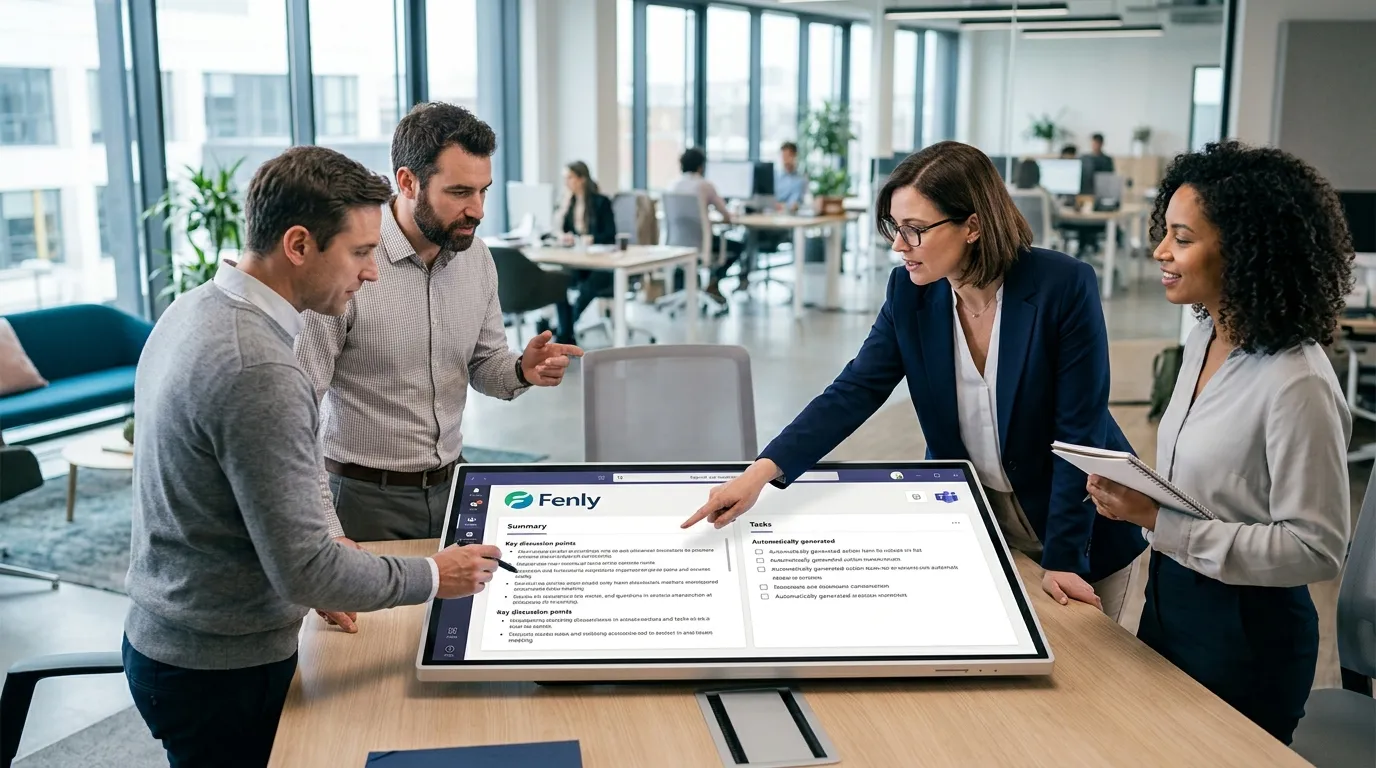
With this technological foundation, meeting records are no longer just passive, literal transcripts. Modern platforms use these innovations to structure data and extract valuable insights from work conversations. Fenly operates right at this frontier, combining these capabilities to turn conversations into organized workflows through an innovative AI meeting notetaker, generating clear action plans and cutting the operational load for teams chasing maximum productivity every day.
5 top technology approaches for transcribing meetings and videos
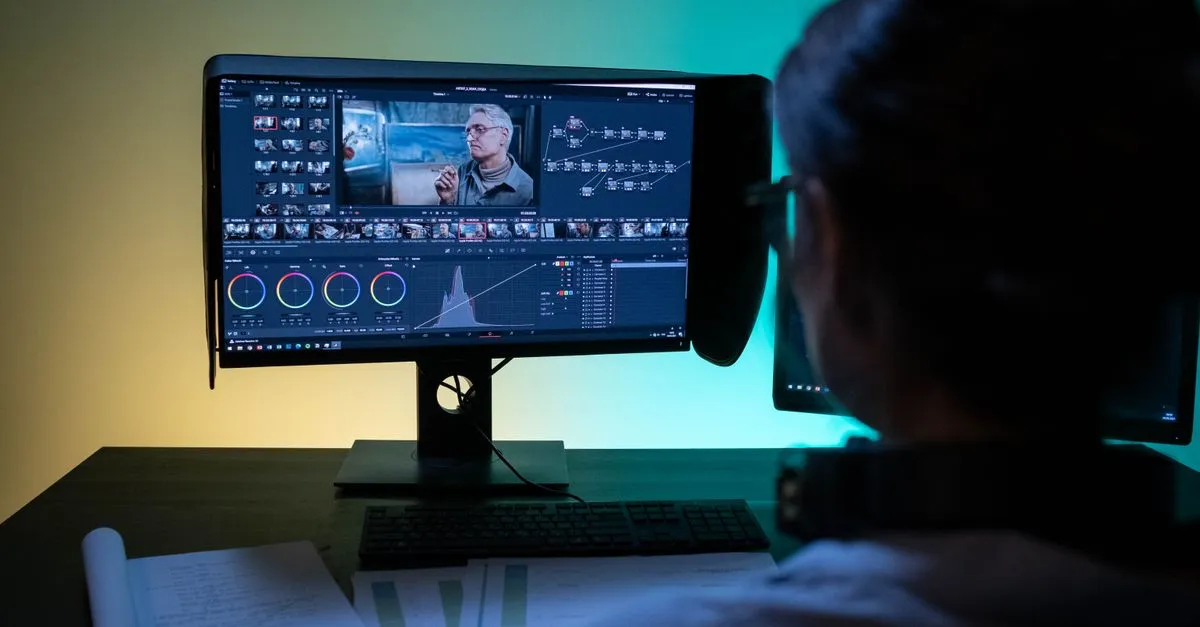
The evolution of methods for turning spoken media into written notes has transformed workplace productivity. Today, different methods and software architectures determine how audio gets processed, directly shaping both processing speed and the practical value of the information generated for businesses.
"Using AI-based tools to automate meeting records can cut time spent on secondary administrative tasks by up to 40%." — International Labour Organization (ILO), 2023
The leading technology approaches used across the corporate world include:
- Automatic Speech Recognition (ASR): The core engine that converts sound waves into text characters, with accuracy measured against phonetic acoustic models.
- Natural Language Processing (NLP): Applied after the initial phonetic conversion to fix context, punctuate sentences coherently, and identify speaker changes throughout the conversation.
- Generative language models: Advanced systems that go beyond literal transcription, delivering strong synthesis skills and automated summaries that structure the points discussed.
- Audio-text synchronization algorithms: Systems that timestamp every word precisely, enabling fast searches within specific parts of the original file.
- Integrated task extraction systems: An intelligence layer that scans the transcribed text to spot action verbs and deadlines, making it easier to manage AI-powered task management.
On top of that, Fenly stands out by unifying all these cutting-edge technologies. Instead of just handing you a disconnected wall of text, it uses advanced AI to organize the workflow, combining high processing speed with technical accuracy. This way, organizations turn raw recordings into structured, strategic knowledge almost instantly.
Automatic speech recognition vs. generative language models: accuracy compared
The evolution of audio technology has transformed the task of turning media files into written records. In the past, the process relied solely on Automatic Speech Recognition (ASR), focused on decoding phonemes. Today, pairing it with generative language models built on Natural Language Processing (NLP) raises accuracy even further, capturing context and clearing out grammatical noise.
"AI applied to natural language processing can cut the time professionals spend on administrative typing and information triage by up to 40%." — Stanford University, 2023
This technological synergy goes beyond simple audio conversion, generating actionable intelligence for everyday work and supporting smarter AI-powered task management.
- Acoustic recognition: Maps phonemes based on statistical audio patterns.
- Semantic analysis: Interprets the real meaning of sentences to avoid incorrect homophones.
- Contextual structuring: Fixes punctuation and organizes the flow of dialogue naturally.
| Evaluation Criteria | Traditional ASR Systems | Fenly's Integrated Platform |
|---|---|---|
| Speech recognition accuracy | High on clean audio, but struggles with slang and accents. | Very high — uses contextual intelligence to refine technical jargon. |
| Synthesis and summarization capability | None. Delivers only literal, unorganized transcripts. | Excellent. Automatically consolidates key points into a daily work briefing. |
| Task and action-plan extraction | Not available. Requires manual triage by the user. | Automated. Turns messages into pending tasks with clear action items and follow-ups. |
| Integration with communication tools | Rare, or dependent on complex third-party APIs. | Native and direct, with full integration across Teams and Slack. |
As a result, AI doesn't just transcribe — it turns conversations into real productivity for anyone looking to manage communication more efficiently.
How task extraction and automated meeting minutes streamline your workflow
"About 71% of meetings within organizations are considered unproductive and inefficient, causing information overload and loss of focus on daily tasks." — Harvard Business Review, 2017
Manually jotting down commitments during video calls eats up valuable attention and creates operational gaps. Technology solves this bottleneck by going far beyond simply producing written records from recordings. Modern systems process the raw record to generate structured deliverables that intelligently guide day-to-day work.
Generating automated meeting minutes aligns teams instantly, documenting decisions and deadlines with zero manual effort. To streamline the process even further, this smart document is enriched by AI-driven task extraction, which identifies the commitments mentioned in the conversation and organizes them into actionable items as part of a broader AI task management workflow.
Bringing these technologies into your daily routine boosts efficiency in clear, measurable ways:
- Centralized pending items: Informal conversations no longer get lost — they become actionable items with clear owners.
- Integration with communication tools: Action plans are pushed directly into your team's everyday chat channels, powered by native Teams integration and Slack integration.
- Continuous tracking: Managing pending items gets easier with features like a daily work briefing and support for natural-language answers to questions about your activities.
Fenly operates right at this frontier, connecting to your communication channels to power the AI task manager that turns messages into tasks automatically. This way, crucial information stops being a static record and becomes part of a dynamic, structured workflow focused on real productivity results.
Conclusion
The evolution of AI technology has made the manual work of recording meetings and presentations obsolete. Combining Natural Language Processing with generative models lets organizations turn raw data into structured, actionable knowledge almost instantly, supporting a routine focused on real results.
Far beyond just producing a static wall of text, Fenly transforms your entire workflow with advanced features like Teams integration and Slack integration, organizing discussions right inside your team's communication channels. By automating activity reports and enabling natural-language answers to questions about ongoing work, the platform takes the stress out of information overload.
By adopting this innovative technology, you and your team gain processing speed, technical accuracy, and clarity in daily planning, with tasks automatically extracted and routed to the right people. Experience the power of AI to streamline your routine, and put Fenly to work to transcribe video to text intelligently — integrating and automating your workflows starting today.
Frequently Asked Questions
How does AI improve accuracy when transcribing video to text?
AI combines Automatic Speech Recognition with Natural Language Processing models to add context to the words it identifies. Unlike the simple software of the past, these advanced systems analyze the meaning of a conversation, eliminating common homophone errors, structuring punctuation coherently, and accurately identifying when speakers change.
What's the difference between a traditional meeting transcript and automated meeting minutes?
A traditional transcript simply converts spoken audio into readable text, delivering long blocks of raw data that require a full read-through. Automated meeting minutes, on the other hand, use generative language models to synthesize the key points discussed, producing structured summaries that clearly and dynamically highlight important decisions and business goals.
How do task extraction and audio-text synchronization work in AI platforms?
These technologies use specific algorithms to synchronize audio and text through precise timestamps. At the same time, tools like the ones offered by Fenly process conversations to identify action items and agreed-upon commitments. This allows conversations and messages to be automatically turned into executable tasks with clearly assigned owners.
Can automatic transcription be integrated with existing corporate communication channels?
Yes. Intelligent processing systems connect directly with the main platforms teams already use every day. Through Teams integration and Slack integration, the generated data is instantly distributed and organized into shared channels, making it easy to view activity summaries and quickly track pending business goals.